The Farming Class
On class, constraint, and the misunderstood politics of agriculture

What do you think of when you hear the word farmer? Often, it conjures a mix of traditional imagery and modern stereotypes. While some still imagine a rural, overalls-wearing, white male figure, perceptions for some are shifting towards a more complex and diversified figure, possibly even a business-savvy and high-tech agricultural entrepreneur - though this is a rare image for those outside of agriculture.
The word farmer can evoke many different images, but less often is it understood in practice as denoting a distinct social and economic class.
Class is about income, but it’s also about how people relate to power, risk, labor, and time. It shapes what choices are available, which risks are acceptable, and whose decisions are legible to the rest of society. When we fail to understand farmers as a class, we misinterpret both their resistance to change and the constraints under which they operate.
The farming class occupies a strange and often contradictory position in American life. Their labor feeds the nation, yet their voices are routinely dismissed. They are studied obsessively by universities, policymakers, and corporations, yet rarely trusted as experts in their own systems. They are framed alternately as stewards of the land and as villains of environmental collapse. Few groups are so scrutinized, so mythologized, and so poorly understood.
Work That Is Also Life
What separates farmers from most other laboring groups is that their work is inseparable from their lives. Farming is not something you clock out of. It is where you live, often where you were raised, and frequently where your family history is physically embedded in land, buildings, and equipment.
This multi-generational continuity creates resilience, but it also creates gravity. Decisions are not made in isolation but often weighed against what a parent did, what a grandparent survived, and what a neighbor will think.
Innovation, in this context, is not simply a technical question. Practices persist not only because they work agronomically or economically, but because they are culturally reinforced as “right,” “responsible,” or “proven” over time. Departing from them carries reputational risk in communities where reputation still matters deeply.
This is one of the least acknowledged forces shaping agricultural decision-making: farmers do not just manage crops; they manage social standing.
Foundational Class to “Backward” Class
In the early history of the United States, farmers were foundational figures in society. Many settlers were farmers by necessity, whether by choice or coercion, and agricultural self-sufficiency was framed as both moral virtue and national strength.
That status shifted dramatically during the Industrial Revolution. Urban centers expanded and industrial labor came to define dominant narratives of progress and farming was increasingly positioned in contrast - a sector in need of modernization. Rural life was often portrayed as traditional, inefficient, or resistant to change, even as agricultural communities continued to adapt to shifting economic, ecological, and technological conditions. The cultural framing of a “backwards” rural class, or a group of people behind in modernization mattered. It lead to investment, political attention, and cultural prestige following urban and industrial priorities rather than rural and agricultural needs, reinforcing a feedback loop in which cities, industry, and technology were treated as the primary engines of advancement.
This period marked the consolidation of the modern urban–rural divide. While farming communities were not abandoned outright, they were increasingly positioned as objects of reform rather than as sources of knowledge or political authority. Farmers were more often studied, advised, and managed than listened to, with expertise flowing toward rural areas in ways that reflected external economic and policy goals.
Modernization was framed as both opportunity and necessity, embedded in credit systems, technology adoption, and market access. For many farmers, the choice was not simply whether to modernize, but how to do so within constraints that increasingly favored capital intensity and consolidation. In this way, farming was supported, reshaped, and disciplined simultaneously, leaving lasting social, economic, and cultural divides that continue to shape relations between urban and rural life, as well as divisions within the farming community itself.
Backward in Reputation, Advanced in Reality
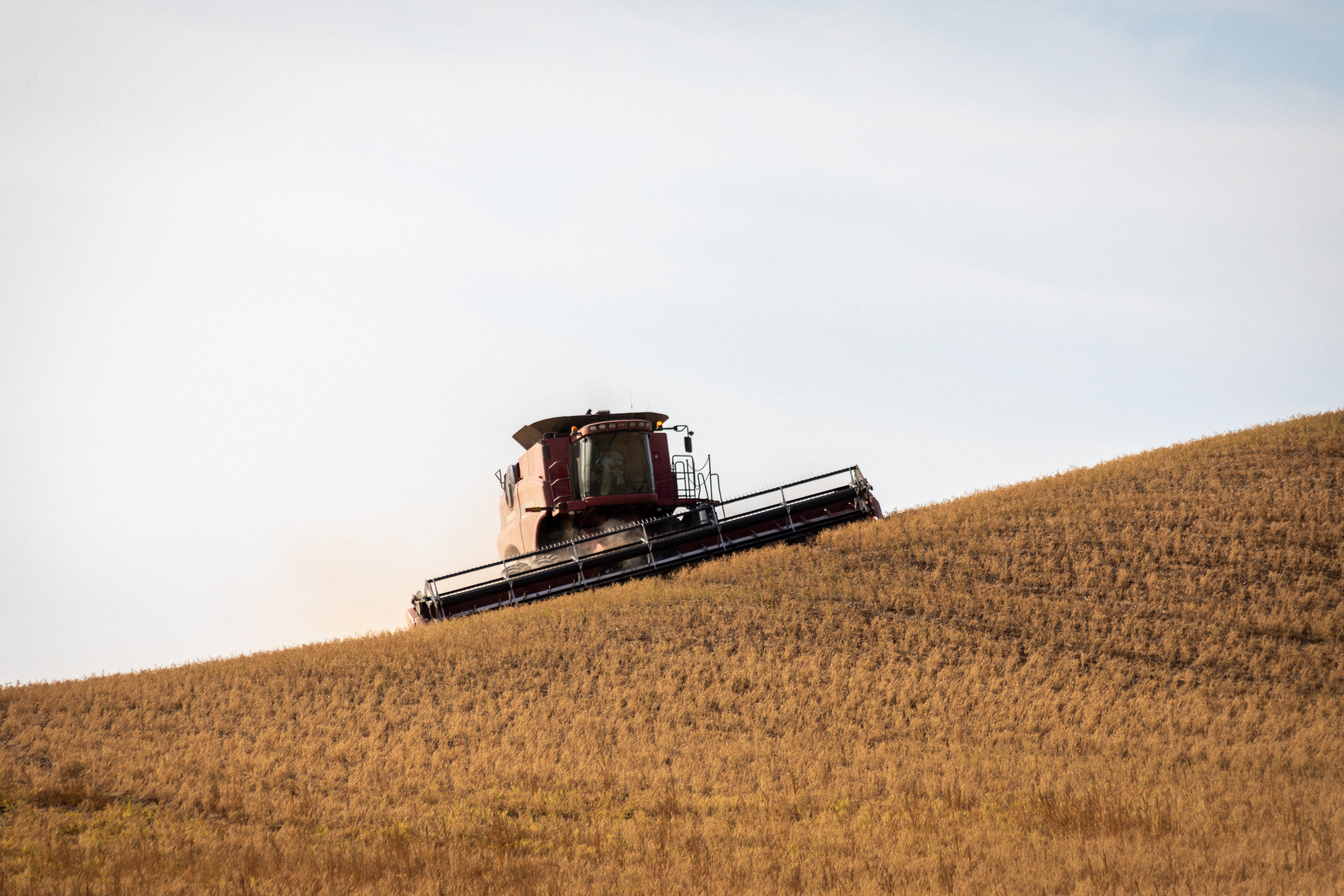
Today’s farmers operate some of the most technologically sophisticated systems on the planet. Precision agriculture, satellite-guided equipment, real-time weather modeling, genetics, chemistry, logistics, and finance all intersect at the field level. Few professions require such a wide and integrated skill set.
And yet, the perception persists: farmers as behind, resistant, uneducated.
This contradiction fuels division and resentment on both sides. Urban audiences often underestimate farmers’ technical competence while overestimating their autonomy. Farmers, in turn, recognize that many of their critics benefit from food systems they do not understand and could not operate themselves.
At the same time, farmers are indispensable clients to some of the largest corporations in the world. Companies like Bayer, Corteva, Syngenta, Koch, and ADM depend on farmers’ purchasing decisions to sustain entire business models. In this sense, farmers are both marginalized and powerful - socially diminished but economically central.
This tension is exhausting to live inside.
A Class Under Pressure
Farmers today operate under extraordinary social pressure not simply as individuals, but as members of a distinct social class whose livelihoods are shaped by asymmetric risk and limited institutional protection. They are expected to both maintain yields while adopting new practices, use new technologies and pay the bills, meet environmental expectations with limited technical support of how to do so, remain financially viable as price takers, uphold family legacy while modernizing, and continually justify their practices to people who have never stood in a field.
These pressures are cumulative and class-specific. The farming class is positioned such that economic risk, social legitimacy, and moral responsibility converge at the level of the individual operation. Unlike many professional or industrial classes, farmers absorb the consequences of systemic failure personally: through debt, land loss, reputational damage, or the end of a family operation.
Change, under these conditions, is necessarily pragmatic. It occurs when risk is reduced, when markets, policy, and social norms align, and when failure does not threaten everything at once. Innovation that increases exposure financially, socially, or ecologically can be existential.
This is why so many well-meaning calls for agricultural transformation fall flat. Telling farmers what they should do without accounting for the class position from which they must act misunderstands the dynamics at play. Agriculture is not resistant to change because farmers are ignorant or uncaring. It is resistant because the costs of getting it wrong are unusually high, unevenly distributed, and borne by those with the least margin for error.
The Farmer as a Social Class
What I am calling the “Farming Class” is a structurally defined social class shaped by a particular relationship to land, capital, risk, and time. From a social stratification perspective, farmers sit in a contradictory position. They are asset holders, yet highly constrained by markets, policy, and corporate supply chains they do not control. They exercise technical expertise, yet lack cultural and political authority relative to the institutions that study, regulate, and profit from their work. Their labor produces public goods while the costs of failure remain largely privatized. This contradiction is constitutive of the class itself: the Farming Class is both indispensable and disregarded; both powerful and constrained.
Many of the behaviors now framed as resistance or conservatism are better understood as rational responses to this class position. Practices persist not only because of tradition, but because social capital, reputational standing, and intergenerational obligation function as informal governance systems within farming communities. Innovation that threatens social standing, asset security, or family continuity carries penalties that are invisible to those outside the class.
Understanding farmers as a class forces a reframing of contemporary debates about agricultural change. It shifts the question away from why farmers fail to change and toward how social, economic, and institutional structures constrain what change is possible without catastrophic risk. It also reveals why symbolic inclusion - being studied, consulted, or courted rhetorically - does not substitute for structural power or genuine agency.
The farming class has always adapted. What remains uncertain is whether the systems that depend on it are willing to adapt as well. Until we engage farmers not as symbols, villains, or romanticized stewards, but as a class shaped by stratification, power, and constraint, we will continue to demand transformation without altering the conditions under which transformation must occur.
And we will continue to misunderstand one of the most essential, complex, and constrained groups in our food system.
You forgot to mention that farmers must posess the market understandingcand prediction skills of an economist, and money management skills of a bank executive.
They must also posess the ability to predict trends in nutrition as it relates to the crop they raise (plant and/or livestock).
Beautifully and intelligently written.
“What I am calling the “Farming Class” is a structurally defined social class shaped by a particular relationship to land, capital, risk, and time.” In regards to capital and time, I believe farmers should store their unused currency units in Bitcoin to help weather the storms of currency debasement.
Look forward to reading more of your work!